
Understanding How Genes and the Environment Shape the Brain
Investigating How Genetic Programs And Environmental Exposures Interact With The Cellular Mechanisms That Build The Nervous System And Influence Neurological Disease.
Temitope H. Adebambo, Ph.D.
Senior Postdoctoral Fellow · Emory University School of Medicine
How Is a Healthy Nervous System Built, and What Happens When Genes or the Environment Disrupt That Process?
Building a functional nervous system requires precise coordination of cell division, cytoskeletal remodeling, neural development, and circuit formation. These processes are shaped by genetic programs but can also be altered by environmental exposures, with consequences that persist into adult brain function. Our research seeks to uncover the cellular and molecular mechanisms underlying these interactions and determine how their disruption contributes to neurodevelopmental abnormalities and neurological disease.
OUR RESEARCH AREAS
01.
Building the Nervous System
How do cellular mechanisms shape the developing nervous system?
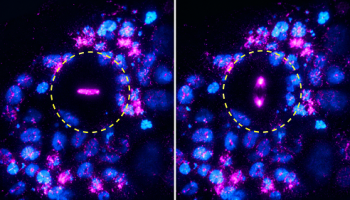
We investigate how cytoskeletal organization and remodeling coordinate neural development, from neural stem-cell regulation to the formation of higher-order brain structures. Our work seeks to define the molecular mechanisms that ensure developing neural cells acquire and maintain the architecture required for normal brain function.
02.
Environmental Stress & the Developing Brain
How do environmental exposures alter nervous-system development?
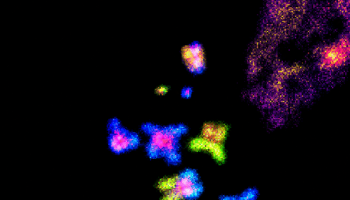
We examine how environmental toxicants disrupt cellular processes required for normal brain development and function. Using experimental models that connect cellular phenotypes with organismal outcomes, we investigate how exposure alters neural stem-cell biology, genome stability, brain development, and behavior.
03.
Genetic Susceptibility & Environmental Stress
Why do genetic differences alter vulnerability to environmental stress?
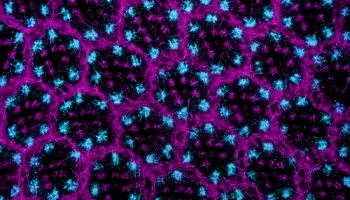
We investigate how genetic susceptibility modifies the response of the nervous system to environmental stress and how these interactions influence neurological dysfunction. By integrating genetic, cellular, and behavioral approaches, we aim to identify mechanisms that connect environmental exposure with disease-associated pathways.
FEATURE DISCOVERY
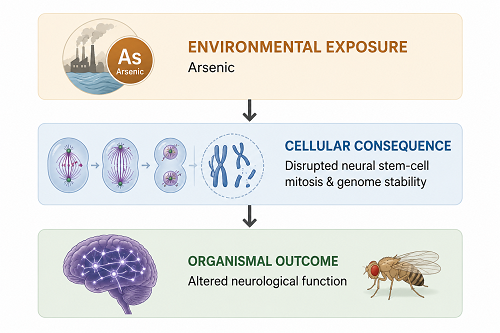
ENVIRONMENTAL ARSENIC DISRUPTS NEURAL STEM-CELL DIVISION AND NEUROLOGICAL FUNCTION
Our work shows that developmental arsenic exposure disrupts neural stem-cell mitotic progression and genome stability in Drosophila , with consequences for adult neurological function. By connecting environmental exposure to cellular defects in the developing nervous system, this work provides a foundation for investigating how environmental stress interacts with genetic susceptibility to influence neurological outcomes.
Secondary Findings
The study also examined how arsenic exposure modifies neurological phenotypes in a humanized tauopathy model.
Adebambo et al. | G3: Genes|Genomes|Genetics | 2025
Arsenic exposure disrupts neural stem cell mitotic progression and genomic stability and impacts neurological function in Drosophila melanogaster
MEET TEMI
FULL NAMES:
Temitope H. Adebambo, Ph.D.
CURRENT POSITION:
Senior Postdoctoral Fellow | Department of Cell Biology | Emory University School of Medicine
BIOGRAPHY:
Temitope H. Adebambo is a neurobiologist investigating how genetic programs and environmental exposures shape nervous-system development and function. His research integrates developmental cell biology, genetics, environmental toxicology, and neuroscience to uncover mechanisms that influence neural development and vulnerability to neurological dysfunction. Currently a Senior Postdoctoral Fellow in the Department of Cell Biology at Emory University School of Medicine, his work uses Drosophila as a powerful experimental system to connect molecular and cellular mechanisms with brain development and behavior. His long-term research program seeks to define how genetic and environmental perturbations interact to influence nervous-system health and disease.

SELECTED PUBLICATIONS
01.
2025 · G3: Genes|Genomes|Genetics
Arsenic exposure disrupts neural stem cell mitotic progression and genomic stability and impacts neurological function in Drosophila melanogaster
Adebambo TH, Medina-Flores F, Zhang S, Lerit DA
02.
2020 · FRONTIERS IN GENETICS
Toxicological Study and Genetic Basis of BTEX Susceptibility in Drosophila melanogaster
Adebambo TH, Fox DT, Otitoloju AA
03.
2024 · BIORXIV
Arsenic impairs Drosophila neural stem cell mitotic progression and sleep behavior in a tauopathy model
Adebambo TH, Flores MFM, Zhang SL, Lerit DA
COLLABORATION & MENTORING
Collaboration and mentorship are central to the research environment I aim to build. I value interdisciplinary approaches that bring together perspectives from developmental biology, neuroscience, genetics, and environmental health, as well as opportunities to support trainees as they develop scientific independence. I welcome conversations with researchers interested in related scientific questions, potential collaborations, and students seeking research or mentorship opportunities.

Genes · Environment · Nervous-System Development
Quick Links
Contact Us
© 2026 Adebambo Neurobiology. All rights reserved.